Perches for Northern Emerald Tree Boas
Perch selection is one of the most consequential and most underestimated aspects of Emerald Tree Boa husbandry. Because Corallus caninus spends virtually its entire life on elevated horizontal surfaces, the perch is not furniture inside the enclosure. It is the animal's primary environment. Every aspect of how the animal rests, thermoregulates, digests, and behaves is mediated through its relationship with the perch it is on. Getting this right matters more than most keepers initially realize, and getting it wrong creates problems that are difficult to trace back to their source.
This page covers not just what perches to use but why specific choices matter at a physiological level, how perch placement interacts with heating and lighting, what perch posture has to do with digestive health, and how to safely source and maintain perches over time.
Why Perches Matter Beyond Basic Support
In their native Guiana Shield and northern Amazon Basin habitats, Corallus caninus coils on horizontal branches that have been selected for a specific combination of diameter, surface texture, structural stability, and position within the canopy gradient. Wild ETBs are not randomly distributed across available branches. They consistently choose perch positions that give them access to appropriate temperature, humidity, and light conditions simultaneously, while providing enough friction and support to maintain their characteristic coiled posture without muscular effort.
Captive perch design needs to replicate not just the physical properties of these branches but the functional role they play in the animal's daily regulatory behavior. A perch that is too wide, too smooth, too short, poorly positioned, or unstable does not just make the animal uncomfortable. It actively interferes with thermoregulation, digestion, and long-term musculoskeletal health in ways that accumulate over months and years.
The Saddle Coil Posture and Why It Matters
The iconic coiled posture of the Emerald Tree Boa, where the body is looped symmetrically over a horizontal branch with the head resting in the center, is not merely an aesthetic feature of the species. It is a functional resting and digestion posture that depends entirely on the properties of the perch the animal is using.
In this position the body weight is distributed across the perch contact points, the ventral scales grip the branch surface through friction, and the loops of the body hold each other in place through the geometry of the coil itself. This posture requires relatively little sustained muscular effort, which is why ETBs can maintain it motionless for extended periods. It is also the posture in which these animals digest prey, with the stomach positioned at a consistent height relative to the body loops and the peristaltic movement of digestion occurring in a relaxed, gravity-assisted orientation.
When a perch is the wrong diameter, too wide to allow proper coiling or too narrow to provide adequate body contact, the animal cannot achieve this posture correctly. It may adopt a modified position with part of the body unsupported, grip the perch with visible muscular tension, or avoid the perch entirely in favor of a different surface. An animal that is chronically unable to achieve proper coil posture is digesting in a compromised position, and compromised digestion posture is a recognized contributing factor in regurgitation. This is one of the clearest direct connections between perch quality and a serious health outcome, and it is why perch selection deserves the same level of attention as temperature and humidity.
Perch Diameter
Perch diameter is the single most discussed and most frequently misunderstood aspect of ETB perch selection. The consistent finding among experienced keepers is that Corallus caninus strongly prefers perches that are slightly smaller in diameter than their widest body section.
This preference is counterintuitive to many new keepers who assume that a larger snake needs a larger branch. The logic of the saddle coil posture explains why the opposite is true. A perch that is too large in diameter prevents the body loops from wrapping down and around the branch far enough to create the interlocking, self-supporting coil. The animal ends up balanced on top of the branch rather than wrapped around it, which requires continuous muscular engagement to maintain and prevents the relaxed, low-effort rest that the saddle posture is designed to provide.
A perch that is slightly smaller than the widest body section allows the loops to wrap further around the branch, creating more contact surface, more friction, and a more stable, self-supporting coil. The animal can relax fully into the posture without gripping continuously.
In practice, appropriate perch diameter for an adult Corallus caninus typically falls in a range that feels surprisingly modest relative to the animal's overall size. The exact figure varies with individual body condition and build, which is one reason why offering multiple perch diameters within the same enclosure is strongly recommended. Different individuals prefer different diameters, and the same individual may use different diameter perches at different times for different purposes.
Perch Length
Perch length receives less attention than diameter but is equally important for proper postural support. An ETB in its coiled saddle posture distributes its body across the perch in a series of loops, and the perch needs to be long enough that the full body can be supported without loops hanging unsupported off either end.
For an adult Corallus caninus the primary perch should ideally run close to the full length of the enclosure or at minimum span the majority of it. A perch that is shorter than the coiled spread of the animal forces part of the body into an unsupported position, which creates chronic muscular strain as the animal compensates and may result in the animal avoiding that perch in favor of enclosure walls, fittings, or other surfaces that are not designed for sustained body contact.
Secondary perches do not need to be as long as the primary perch and can be shorter sections positioned at different heights and angles to create navigable pathways through the enclosure. But the primary resting perch where the animal spends most of its time should be sized to fully support the animal's body in its natural coiled posture.
Perch Height and Gradient Positioning
Where a perch sits within the enclosure determines what environmental conditions the animal has access to from that perch. This is one of the most important and most consistently overlooked aspects of perch setup, and it connects directly to heating, lighting, and humidity management.
As covered in the heating and lighting pages, a well-designed enclosure creates gradients across multiple axes simultaneously. Temperature is warmer at the top of the warm end and cooler at the bottom of the cool end. Humidity tends to be higher lower in the enclosure and somewhat lower higher up where airflow is greater. UVB intensity is highest near the lamp and decreases with distance. The animal navigates these gradients by choosing perch positions that give it access to the conditions it needs at any given moment.
The primary perch, where the animal spends most of its daytime resting hours, should be positioned in the upper warm end of the enclosure at a height that places it within the appropriate temperature range for thermoregulation and digestion. For most setups this means positioning the primary perch so the animal's dorsal surface sits within the warm zone created by the heat source, typically in the range of 82 to 88 degrees Fahrenheit depending on the specific setup, with access to cooler air above and beside it.
If a UVB source is present, the primary perch position relative to the lamp determines the UVI the animal is exposed to during its resting hours. As covered in the lighting page, the target UVI range for Corallus caninus using the shade method is 0.5 to 1.0, and using the sunbeam method up to 2.0 to 2.5 at the perch with a gradient to near zero in retreat areas. Perch height relative to the lamp should be measured with a Solarmeter 6.5 to verify actual UVI at the perch surface rather than estimated from manufacturer distance charts.
Secondary perches at lower heights in the cool end of the enclosure give the animal access to cooler, more humid conditions. Perches at intermediate heights between the primary and secondary positions create navigable pathways that allow the animal to move gradually through the gradient rather than being limited to two discrete positions. An ETB that can choose between a warm upper perch, a cool lower perch, and several positions in between is actively thermoregulating in a way that closely resembles wild behavior.
Mounting Stability
Every perch in the enclosure must be stable under the full weight of the animal, with no flex, rotation, or shift when the snake moves or repositions. This is not a comfort consideration. It is a safety and welfare requirement.
An ETB that experiences a perch shifting under it during the night, when it is actively moving and hunting, can fall and injure itself. Falls from height in a well-planted arboreal enclosure may be cushioned by substrate and vegetation, but falls in enclosures with hard floors or onto heat elements can cause serious injury. Even a perch that does not fail completely but flexes noticeably under load will be avoided by a perceptive animal, which means that perch position is effectively lost from the enclosure's gradient architecture regardless of how well it was placed.
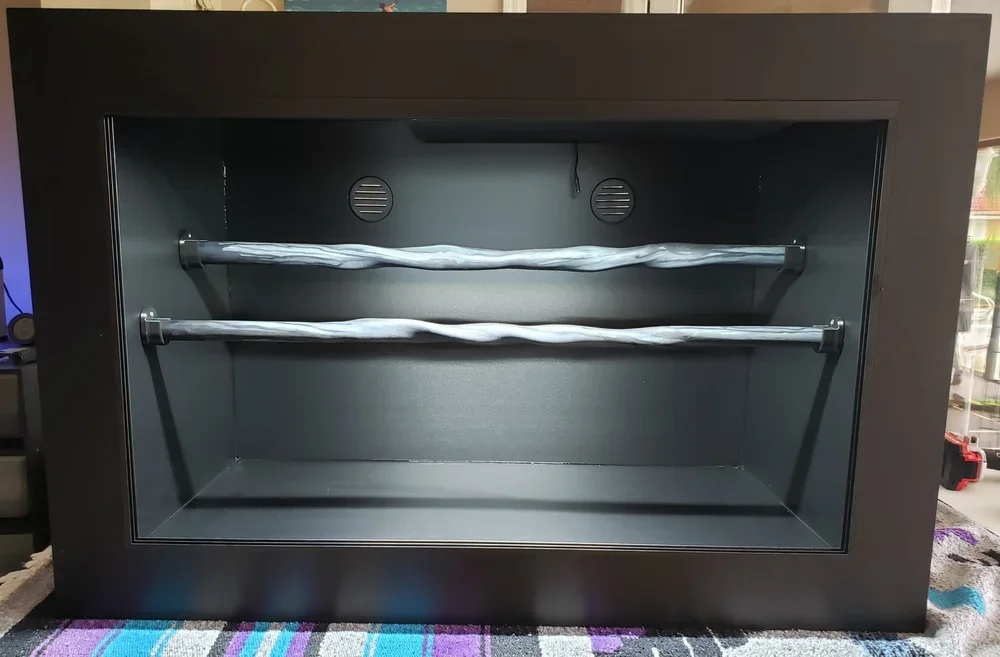
Mounting methods vary by enclosure type and perch material. In PVC enclosures, threaded perch holders or brackets mounted directly into the PVC panels provide rigid, reliable support for PVC or dowel perches. The 1/2 inch panel thickness of most quality PVC enclosures supports perch mounting hardware without significant risk of the mounting point pulling through under normal load. In wood enclosures, screws or bolts through the panel into the perch end provide similar rigidity. Suction cup mounting systems are not appropriate for ETB perches regardless of the load rating stated by the manufacturer. Suction cups lose adhesion over time in humid environments and their failure is often silent, with no warning before the perch drops.
For natural branches and irregular perch shapes, SG Innovative Designs produces precision 3D-printed perch holders and mounting brackets specifically engineered for arboreal reptile enclosures. These provide stable, adjustable anchoring for branches of varying diameters without requiring permanent modification of the enclosure walls.
All perch mounting should be checked regularly as part of routine maintenance. In high-humidity environments, mounting hardware can corrode over time and should be inspected for integrity at each enclosure cleaning.
Multiple Perch Levels and Environmental Choice
A single well-positioned perch gives an animal one set of environmental conditions. Multiple perches at genuinely different heights, in genuinely different thermal and humidity zones, give the animal the ability to choose the conditions it needs at any given time. This distinction matters considerably for long-term welfare.
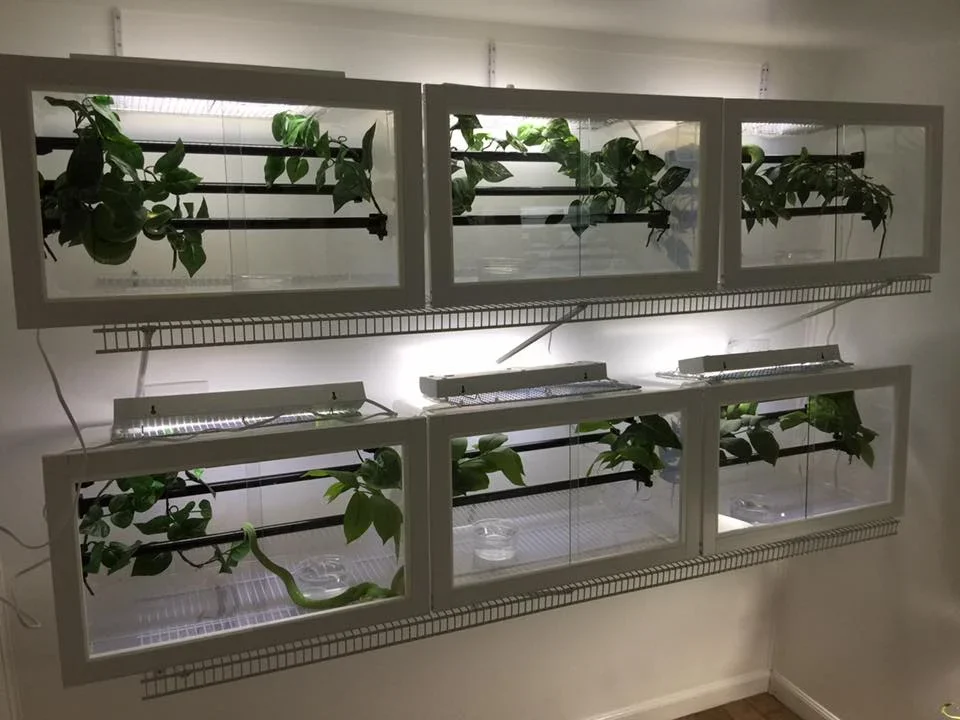
The minimum effective perch configuration for Corallus caninus should include a primary perch in the upper warm end where the animal spends most of its daytime resting hours, a secondary perch in the cool end at a lower height where the animal can access cooler and more humid conditions, and at least one intermediate perch that creates a navigable pathway between these two positions. Additional perches, vines, and branch sections that allow movement throughout the enclosure at multiple heights further enrich the behavioral environment and encourage the natural locomotion that is part of a healthy arboreal snake's daily activity pattern.
Different perch diameters across the available perch options are strongly recommended. Offering two or three diameters, with the primary perch at the preferred diameter for that individual and secondary perches at slightly different sizes, allows the animal to express natural perch selection behavior and may reveal individual preferences that a single-diameter setup would not expose.
The enclosure should be set up so that moving from the primary perch to the secondary perch and back is physically accessible, with perch heights and spacings that allow the animal to travel between positions without having to descend to the floor or navigate impossible gaps. ETBs are not designed to be floor-level animals and an enclosure configuration that requires floor contact to move between perches represents a failure of the spatial design.
Perch Materials
PVC Perches
PVC pipe is among the most widely used perch material for captive ETBs and for good reason. It is durable, moisture resistant, easy to clean, available in precise diameters, and can be cut to any length. It does not rot, warp, harbor bacteria in the material itself, or degrade in the high-humidity environments ETB enclosures require.
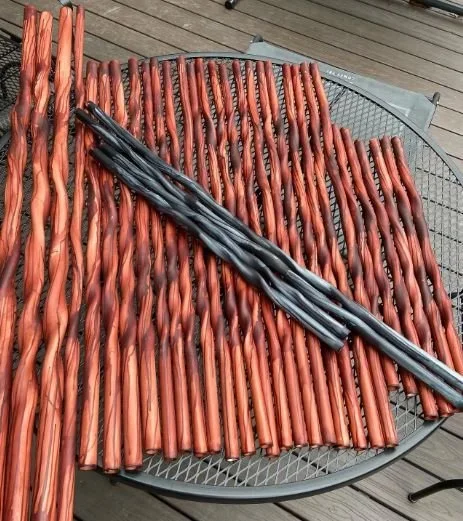
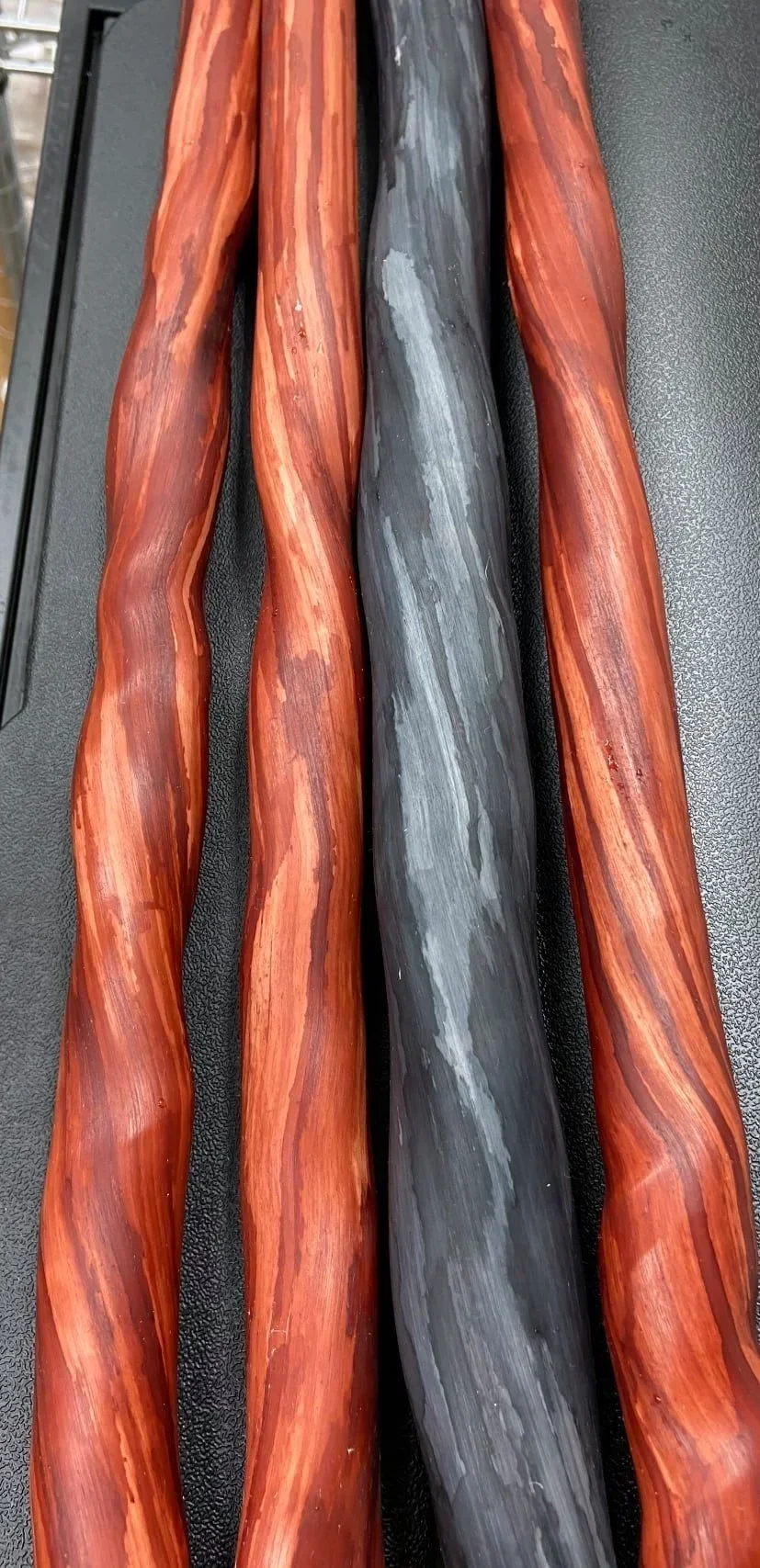
The primary limitation of smooth PVC is grip. Smooth pipe provides relatively little friction for the ventral scales to work against, which can make it harder for the animal to achieve the stable coiled posture that textured surfaces support. This is typically addressed by wrapping the pipe with a textured material, cork tape, natural fiber cord, or reptile-safe grip tape to increase surface friction while retaining the underlying structural benefits of the PVC core. Some keepers use textured PVC or pipe with a roughened surface for the same purpose.
Diameter consistency is one of PVC's significant advantages. A keeper can verify that a specific pipe diameter is appropriate for their animal and replicate it exactly across multiple perches and enclosures.
Natural Branches
Natural branches provide irregular surface texture, variable diameter along their length, and a naturalistic appearance that synthetic materials cannot fully replicate. For an arboreal species that evolved gripping irregular branch surfaces, the texture of real wood is functionally meaningful, not merely aesthetic. The varied grip points along a natural branch allow the animal to fine-tune its coil position in ways that a uniform surface does not.
The requirements for safe natural branch use are thorough. Not all wood species are safe for reptile enclosures. Woods to avoid include cedar, pine, and other conifers, which contain aromatic oils toxic to reptiles. Cherry, black walnut, and several other hardwoods also carry chemical concerns. Safe options commonly used include maple, oak, birch, beech, willow, and magnolia, among others. If the species of a collected branch is uncertain, it should not be used.
Sourcing matters as much as species. Branches collected from roadsides or areas where pesticides, herbicides, or vehicle exhaust are present should not be used regardless of wood species. Garden-treated or chemically fertilized areas are similarly off-limits. Branches from known-clean areas, ideally collected from above ground level rather than from the forest floor where parasite eggs and fungi accumulate, are the safest starting point.
Cleaning collected branches before use is essential. The most reliable method is a combination of scrubbing with a stiff brush under running water to remove debris, followed by either baking in an oven at 250 to 300 degrees Fahrenheit for 30 to 60 minutes for smaller branches, or a prolonged soak in a dilute bleach solution of approximately one part bleach to ten parts water followed by thorough rinsing and complete drying for larger pieces that cannot be safely heated. Branches must be fully dry before placement in a humid enclosure to prevent mold development in the wood itself.
Structural soundness must be assessed before mounting. A branch that appears solid externally can be internally hollow or rotten, which means it will fail under load without warning. Inspect both ends of any branch cut and look for soft spots, unusual discoloration, or fungal growth before deciding whether it is structurally appropriate to use.
Epoxy and Resin Perches
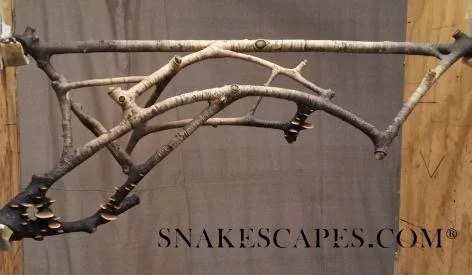
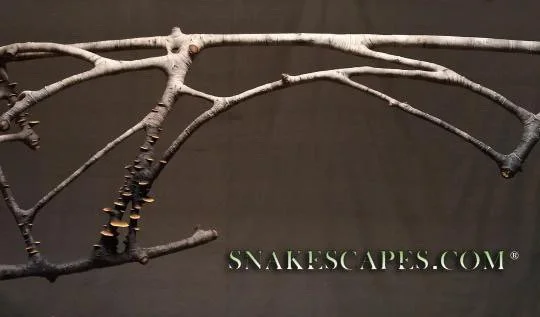
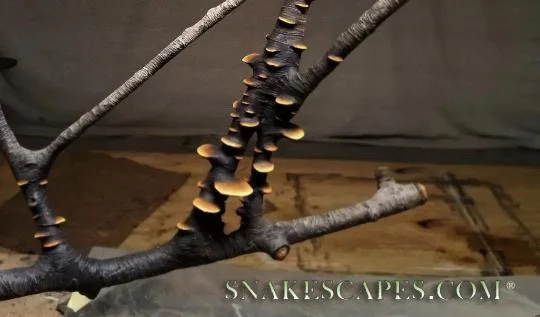
Custom epoxy and resin-based perches such as those produced by Snakescapes offer a middle ground between the naturalistic appearance of wood and the maintenance advantages of synthetic materials. These perches are rigid, non-porous, moisture resistant, and can be sculpted to replicate the surface texture and irregular diameter of natural branches without the associated safety concerns or cleaning requirements.
Because they are non-porous, epoxy perches do not harbor bacteria in the material itself and can be cleaned and disinfected with the same products used on other enclosure surfaces. They do not rot, warp, or degrade in high-humidity environments. For display enclosures or setups where naturalistic appearance is a priority alongside long-term durability, these are a strong option.
3D Printed Perches
3D printed perch systems such as those from The Perch Craft offer modular, adjustable perch configurations in reptile-safe rigid plastics. These systems are particularly useful for keepers who want precise control over perch height and positioning within the enclosure, or who are setting up multiple enclosures with consistent configurations.
Like PVC, 3D printed perches benefit from surface texture additions to improve grip. The modularity of stackable systems allows perch heights to be adjusted without permanent modification of the enclosure, which is useful for setups where the optimal perch position is still being dialed in.
Soaker Hose and Flexible Vines
Soaker hose material and flexible artificial vines serve a different function from rigid horizontal perches. They are best understood as connective tissue within the enclosure, creating pathways between perch positions, adding visual complexity and cover, and allowing the animal to move through the enclosure without having to drop to the floor.
Flexible materials should be firmly anchored at multiple points to prevent sagging under the animal's weight, which creates the same instability problem as a poorly mounted rigid perch. They should not be the primary resting surface. An animal coiled on a flexible vine that sags under its weight cannot achieve a stable saddle posture and will not rest comfortably there over extended periods. As supplementary pathways and environmental complexity, properly anchored flexible materials are valuable. As primary perches, they are inadequate.
Perch Hygiene and Cleaning
Perches accumulate shed skin material, mite debris, bacteria, and in feeding enclosures, blood and prey residue over time. This accumulation is relevant to skin health, respiratory health, and the overall microbial environment of the enclosure, and it is a maintenance consideration that is easy to overlook against the more visible cleaning tasks of substrate replacement and surface wiping.
PVC and epoxy perches can be removed and cleaned with a dilute disinfectant solution appropriate for reptile enclosures, scrubbed with a stiff brush to remove debris from textured surfaces or wrapping, rinsed thoroughly, and dried before replacement. Any textile wrapping on PVC perches should be inspected at each cleaning and replaced when it shows signs of bacterial colonization or material degradation.
Natural wood perches cannot be chemically disinfected in the same way without the risk of solution absorption into the wood. Surface cleaning with a stiff brush and hot water removes debris effectively. Branches that show signs of mold growth, unusual softening, or significant bacterial contamination should be replaced rather than cleaned, as the contamination is likely penetrating into the wood beyond what surface cleaning can address.
Cleaning frequency depends on enclosure type and feeding arrangement. In bioactive enclosures where the microfauna population processes organic material, perch cleaning may be less frequent than in non-bioactive setups. In any setup where prey items are offered on or near the perch, post-feeding cleaning of the immediate area is worthwhile.
For a full discussion of enclosure cleaning protocols see the cleaning page.
The Reptile Perch
The Reptile Perch specializes in modular PVC perches designed specifically for snakes and other arboreal reptiles. Their systems include custom-colored PVC pipes, stackable tub perches, and perch holders to create vertical climbing opportunities within racks or traditional enclosures. The modularity allows keepers to configure perches for animals of different sizes and activity levels.
Best suited for: Adjustable PVC systems, tub conversion perches, modular vertical setups, adult arboreal snakes.
Snakescapes
Snakescapes produces custom, hand-sculpted arboreal perches and habitat elements designed specifically for snakes. Their epoxy-based perches are rigid, non-porous, and highly durable, eliminating common issues such as sagging, warping, or moisture retention seen with natural wood. Each piece is built to order and can be tailored in size, texture, and coloration, making them well-suited for display enclosures as well as long-term captive setups for arboreal species.
Best suited for: Custom-built arboreal perches, rigid non-wood climbing structures, display-quality enclosures, adult arboreal snakes including Emerald Tree Boas.
The Perch Craft
PerchCraft produces 3D‑printed arboreal perches and accessories designed for reptiles including arboreal snakes. Their offerings include medium and large perches, “Mega Perch” standing perches, and stackers that allow multiple perches to be arranged at varying heights. All products are made from reptile‑safe rigid plastics to support climbing behavior and can be built into taller perch configurations with stackable supports.
Best suited for: Modular 3D‑printed perch systems, adjustable height climbing solutions, and tub/rack integration.
SG Innovative Designs
https://sginnovativedesigns.weebly.com/
SG Innovative Designs offers precision-made perch holders and mounting brackets engineered to securely anchor natural or artificial perches inside reptile enclosures. Their 3D-printed designs focus on stability, ease of installation, and clean aesthetics, allowing keepers to create elevated, naturalistic perch networks without relying on suction cups or unstable supports. These holders help prevent perch rotation and sagging, improving overall structural integrity while maintaining flexible layout options for custom enclosure builds. The result is a more secure, predictable perch system that supports proper posture, resting behavior, and long-term enclosure durability—especially important for arboreal species like Emerald Tree Boas.
Best suited for: Keepers building stable, naturalistic perch systems that prioritize safety, secure mounting, and flexible enclosure design for arboreal snakes.
Wholesale Virgin Cork Bark
https://wholesalevirgincorkbark.com/
Wholesale Virgin Cork Bark is a family-owned distributor based in Encinitas, California, sourcing premium sustainably harvested virgin cork bark directly from farming partners in Portugal and Spain. Their inventory includes rounds, flats, and tiles in a range of sizes, with free ground shipping to the lower 48 states on every order. Cork bark is one of the most practical natural perch materials available for arboreal enclosures; it is naturally antimicrobial, resistant to mold and rot, holds up well in high-humidity environments, and provides the irregular surface texture that allows ETBs to grip and coil effectively. Buying direct from a bulk distributor rather than through retail channels gives keepers access to larger pieces and better value, which matters when outfitting a full enclosure with multiple perch runs.
Best suited for: Natural cork bark rounds and flats for arboreal perches, bioactive enclosure builds, and high humidity ETB setups requiring durable mold resistant materials.