
Northern Emerald Tree Boa
Sp. Corallus caninus
The Northern Emerald Tree Boa (Corallus caninus) is a remarkable arboreal snake native to the Guiana Shield region of northern South America. Researchers and herpetologists often refer to this locality as the “Classic” Emerald Tree Boa in scientific literature, photography, and zoological collections, making it the standard reference for the species. Celebrated for its vivid emerald green coloration, bold white dorsal patterning, and robust muscular body, it remains one of the most iconic arboreal snakes.
As a mid-level predator, the Northern Emerald Tree Boa regulates populations of small mammals and birds, helping maintain balance within its rainforest ecosystem. Its presence indicates forest health, reflecting the stability and biodiversity of its habitat.
The species also attracts significant scientific and educational interest. Researchers study it for its specialized arboreal adaptations, including biomechanics, dentition, thermoregulation, and ontogenetic color change. Its striking appearance and ecological role make it one of the most visually and biologically distinctive snake species in the Neotropics, contributing to both herpetological research and public education.
Physical Characteristics
The Northern Emerald Tree Boa is a robust, arboreal snake exhibiting a combination of size, coloration, and anatomical specializations that reflect its canopy-dwelling lifestyle.
Adults typically reach 5–6 ft (1.5–1.8 m) in length, with large females occasionally exceeding 6.5 ft. Clear sexual dimorphism is present: females are heavier-bodied and more massive, while males tend to be more slender with proportionally longer tails. Northern locality individuals are especially noted for their thick, muscular build, well suited for life in the trees.
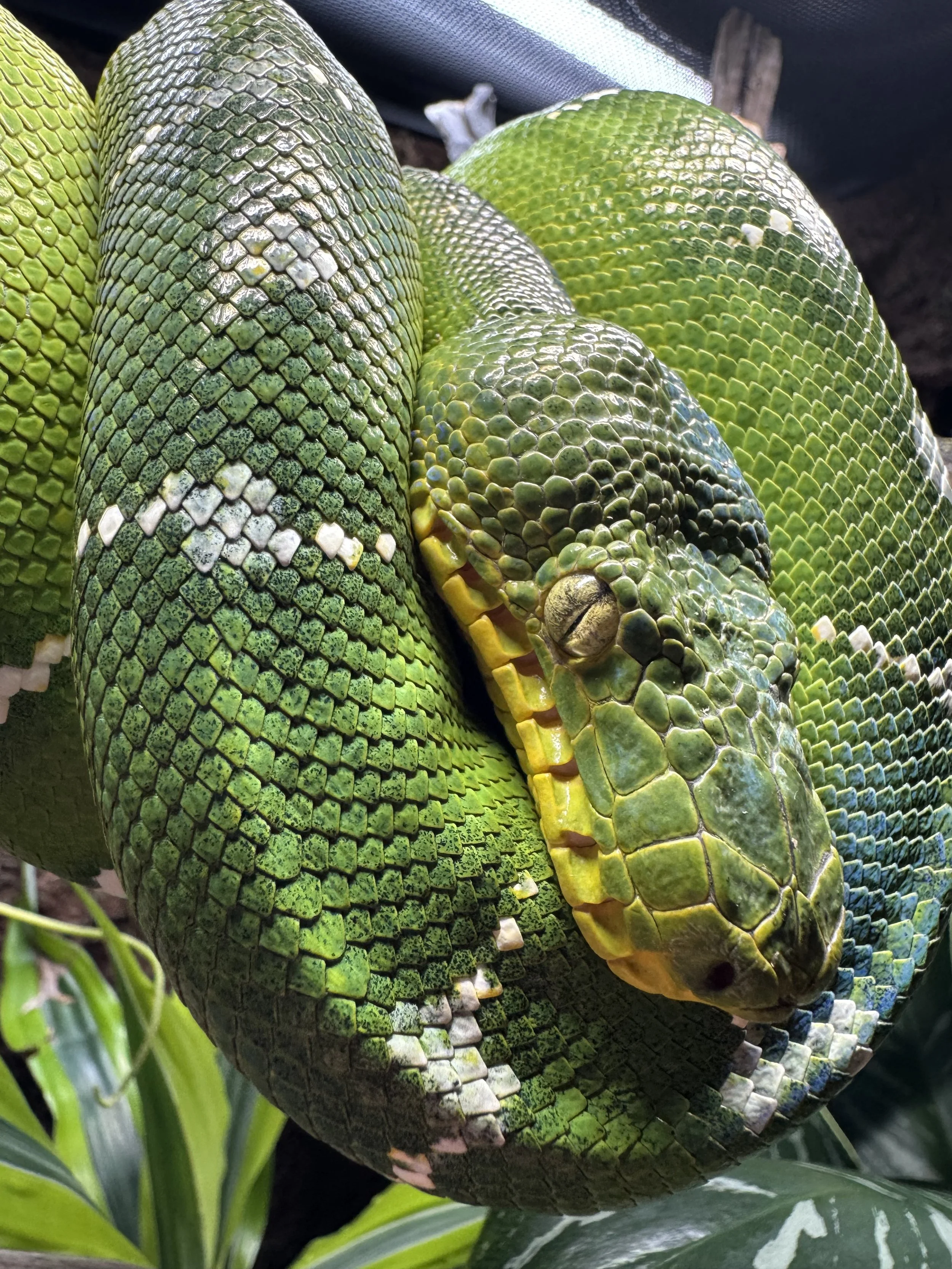
Coloration is one of the defining features of this locality. Adults display a bright emerald green base color with bold white zig-zag or chain-like dorsal markings that may appear continuous or broken. The ventral surface ranges from cream to pale yellow, providing contrast against the dorsal patterning.
Juveniles undergo a pronounced ontogenetic color change. Neonates are born red, orange, mint green, or reddish-brown and gradually transition to their adult green coloration over a period of approximately 9–18 months.
The species is further adapted for arboreal predation through its physical anatomy. Strongly keeled scales provide increased traction on branches, while exceptionally long, recurved teeth allow for secure capture of birds and mammals. Relative to head size, the Northern Emerald Tree Boa possesses some of the longest teeth observed among boid snakes.
Habitat & Environment
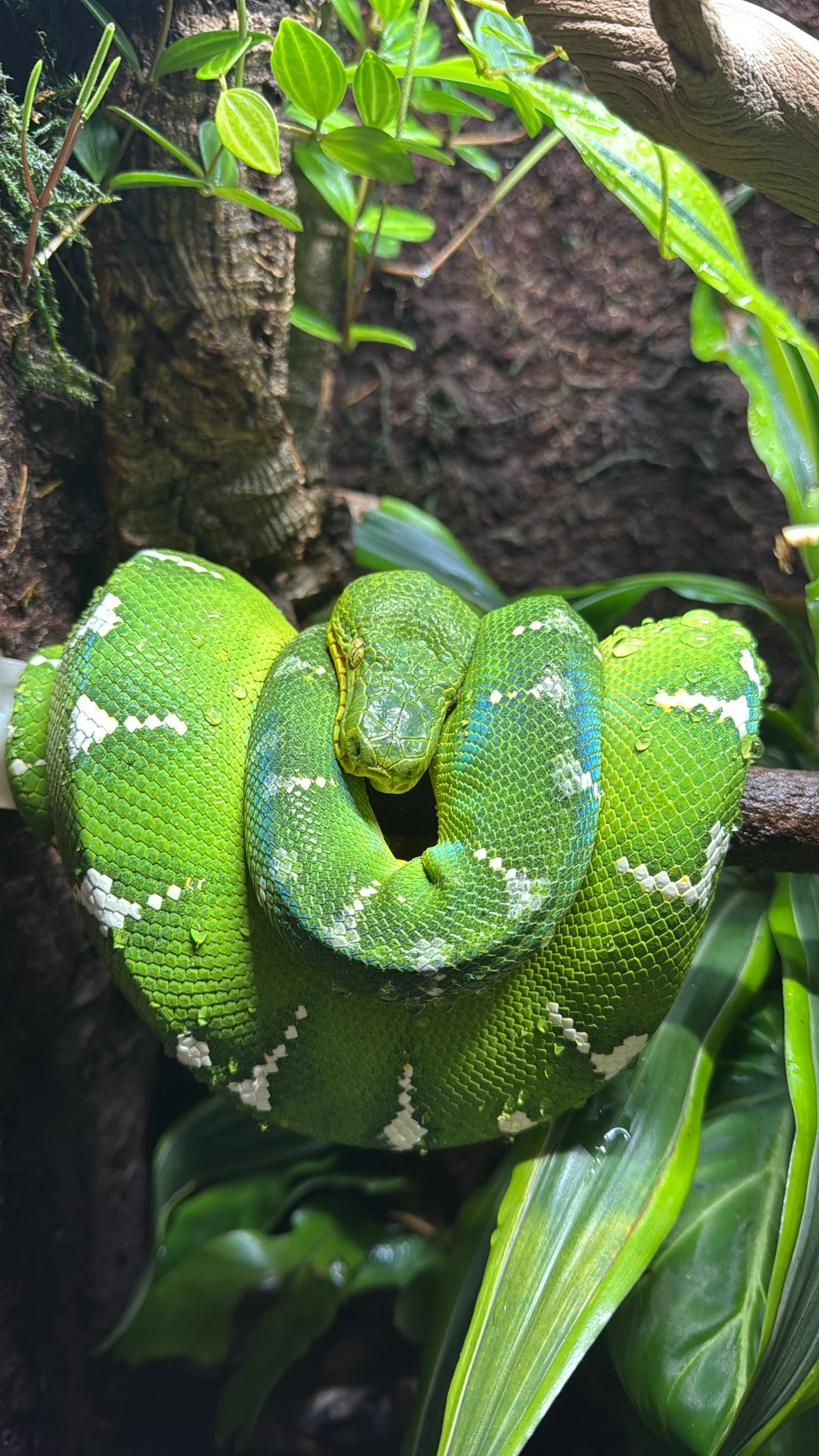
The Northern Emerald Tree Boa thrives in the lush, lowland tropical rainforests of the Guiana Shield, where it occupies primarily primary (old-growth) forests. This species is highly arboreal, spending most of its life in the mid- to upper canopy, often coiled along sturdy branches overlooking streams, rivers, and other water sources.
Typical Wild Parameters
Humidity:
Day Time: 75 - 90%
Night Time: 80 - 100%
Temperature:
Daytime: 78–88 °F (25.6–31.1 °C)
Nighttime: 72–80 °F (22.2–26.7 °C)
Rainfall:
Heavy and consistent year round
These conditions provide both the moisture and temperature stability essential for thermoregulation, camouflage, and hunting in the rainforest canopy. The dense foliage and proximity to water also support the abundance of birds and small mammals that make up the snake's diet.

Behavior, Diet, & Lifespan
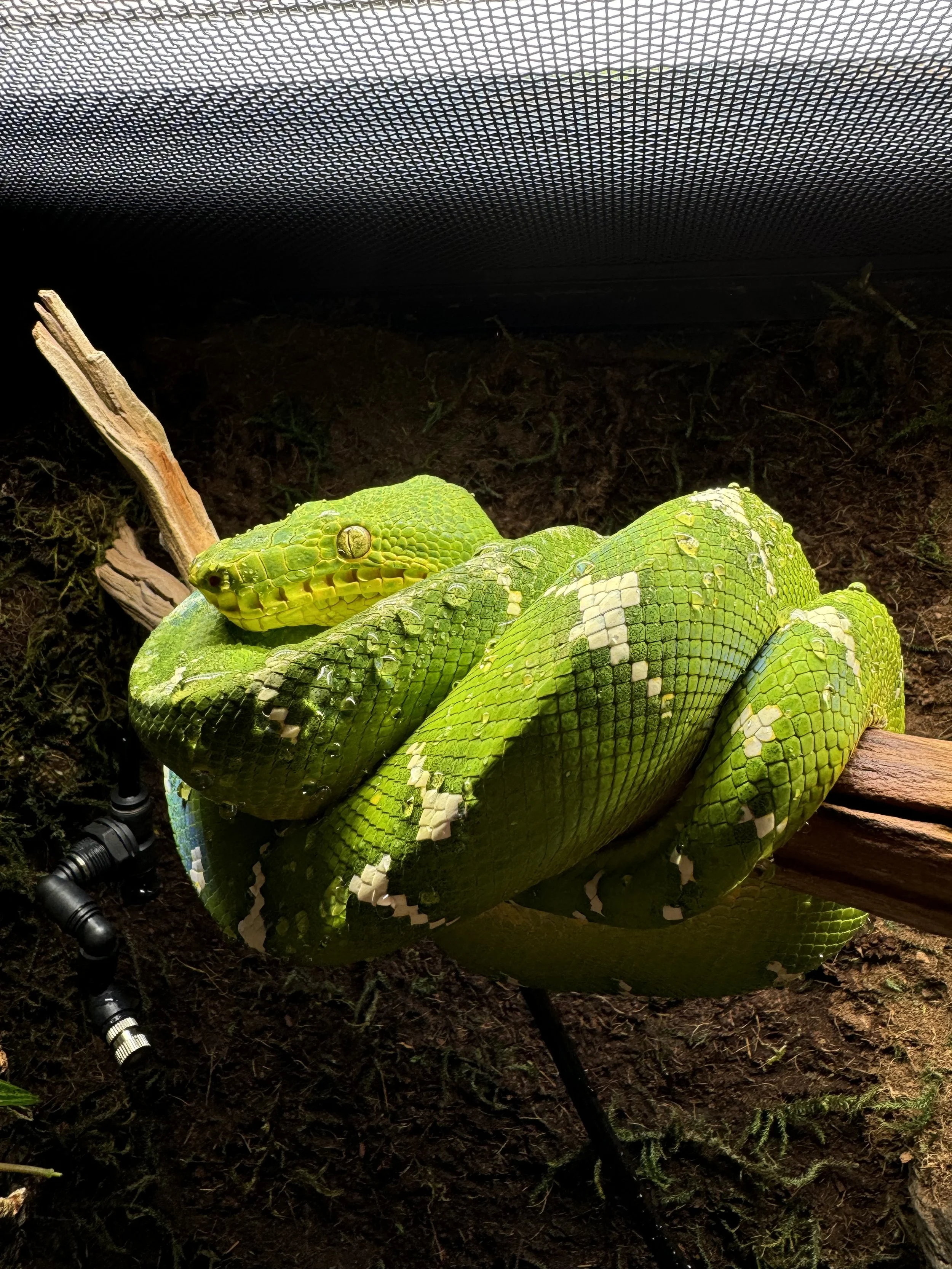
The Northern Emerald Tree Boa exhibits highly specialized nocturnal to crepuscular behavior, spending daylight hours resting hidden in the mid- to upper-canopy branches. By night, it becomes an active hunter, relying on stealth, ambush strategies, and precise strikes. Wild individuals are typically defensive and can react aggressively if disturbed, but captive-bred specimens often adapt to human presence, showing increased tolerance with minimal, consistent handling. The species' characteristic posture—coiled over a branch in a "saddle" position—provides both stability and an optimal strike angle when hunting.
Diet & Feeding: As ambush predators, Northern Emerald Tree Boas depend on exceptional camouflage and the element of surprise. Their heat-sensing pits allow detection of warm-blooded prey even in dense foliage or low light. The diet consists mainly of small arboreal mammals, such as rodents and bats, and birds, which they strike with precision from above. Juveniles may occasionally feed on small reptiles. Feeding behavior is highly selective and opportunistic, with individuals demonstrating patience and calculated timing during hunting. Captive studies have shown that the snakes can remember hunting locations and may strike multiple times in succession if prey attempts to escape.
Growth & Lifespan: Northern Emerald Tree Boas grow slowly, reaching sexual maturity around 3–4 years for males and 4–6 years for females. Wild individuals typically live 15–20 years, while well-maintained captive specimens often surpass 25 years. The species' slow growth and longevity are closely linked to its specialized arboreal lifestyle, low predation risk in the canopy, and energy-efficient hunting strategies.
Northern Emerald Tree Boa Variations
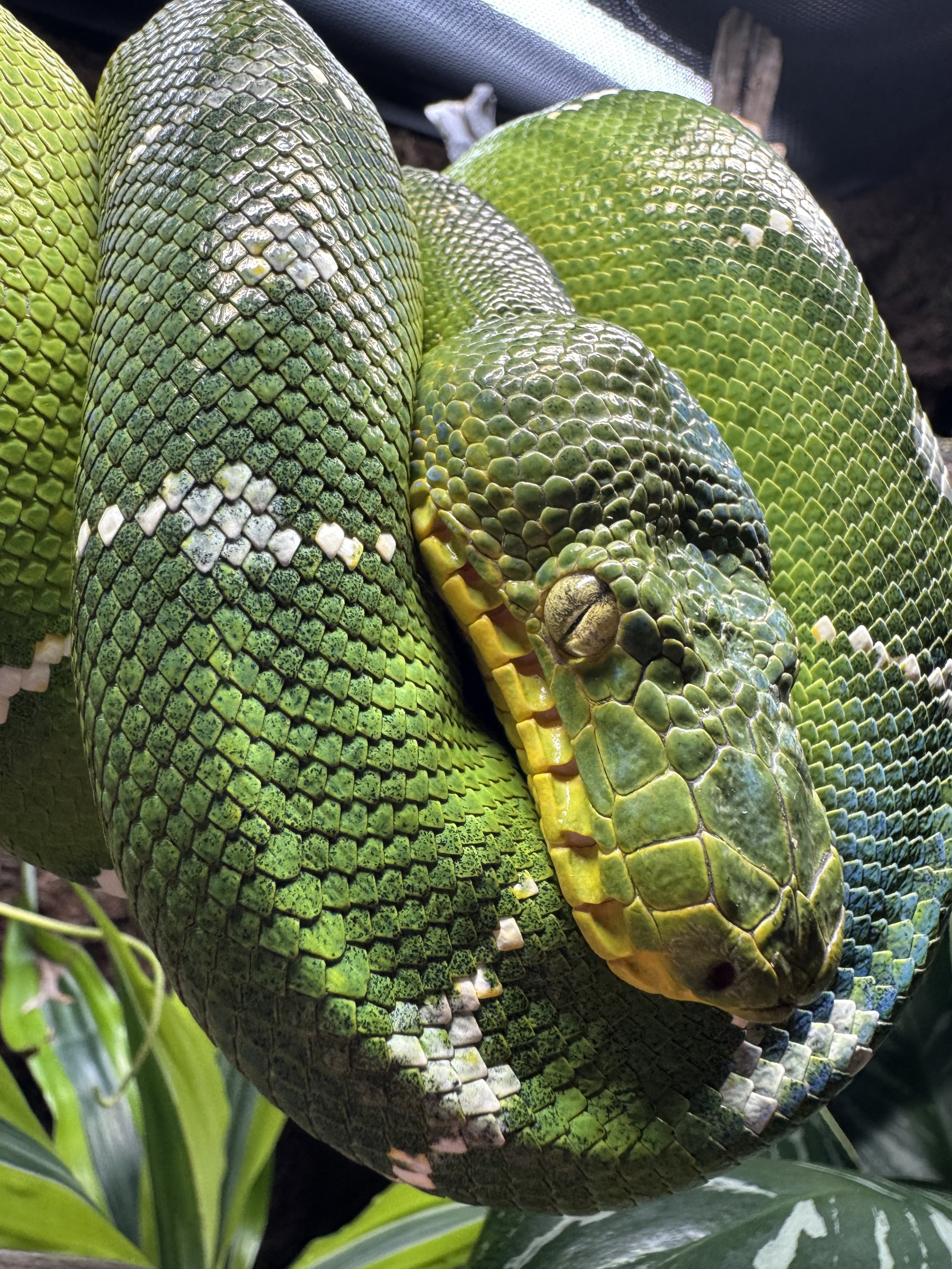
Normal Emerald Tree Boa - Owner: Zion McAndrews
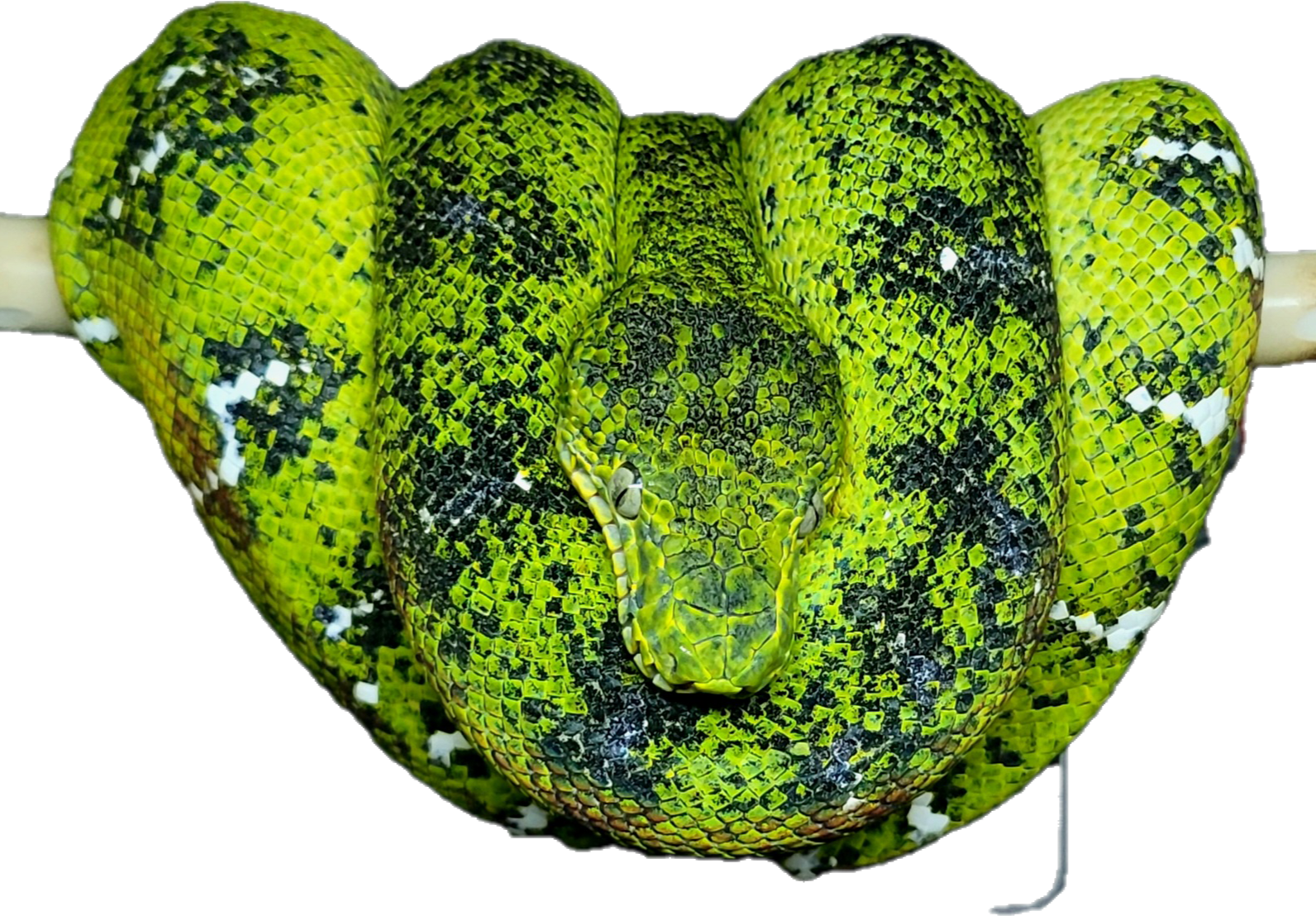
Granite Northern Emerald Tree Boa - Owner: Keith Flax
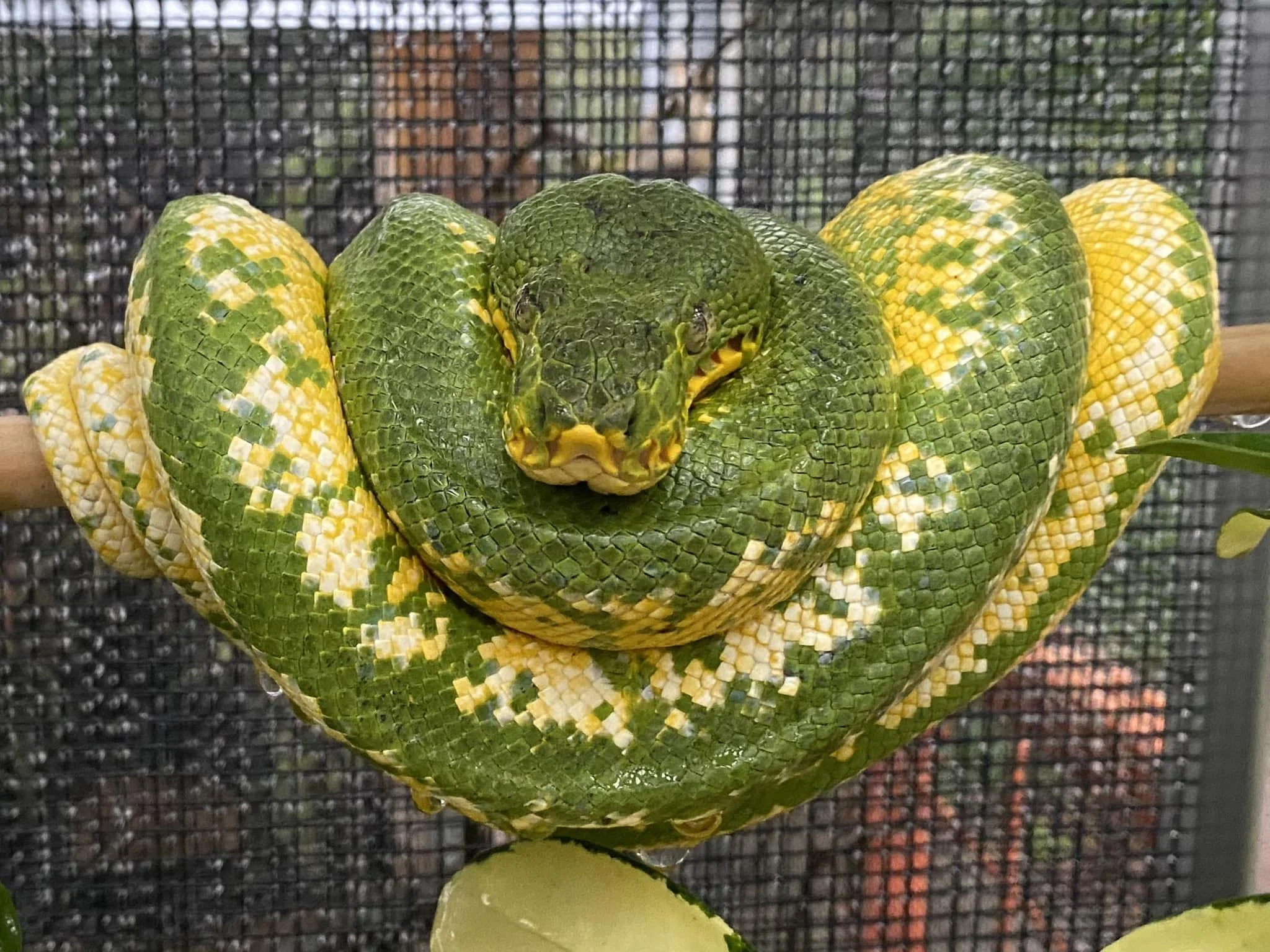
High Yellow Northern Emerald Tree Boa - Owner: Ron St. Pierre
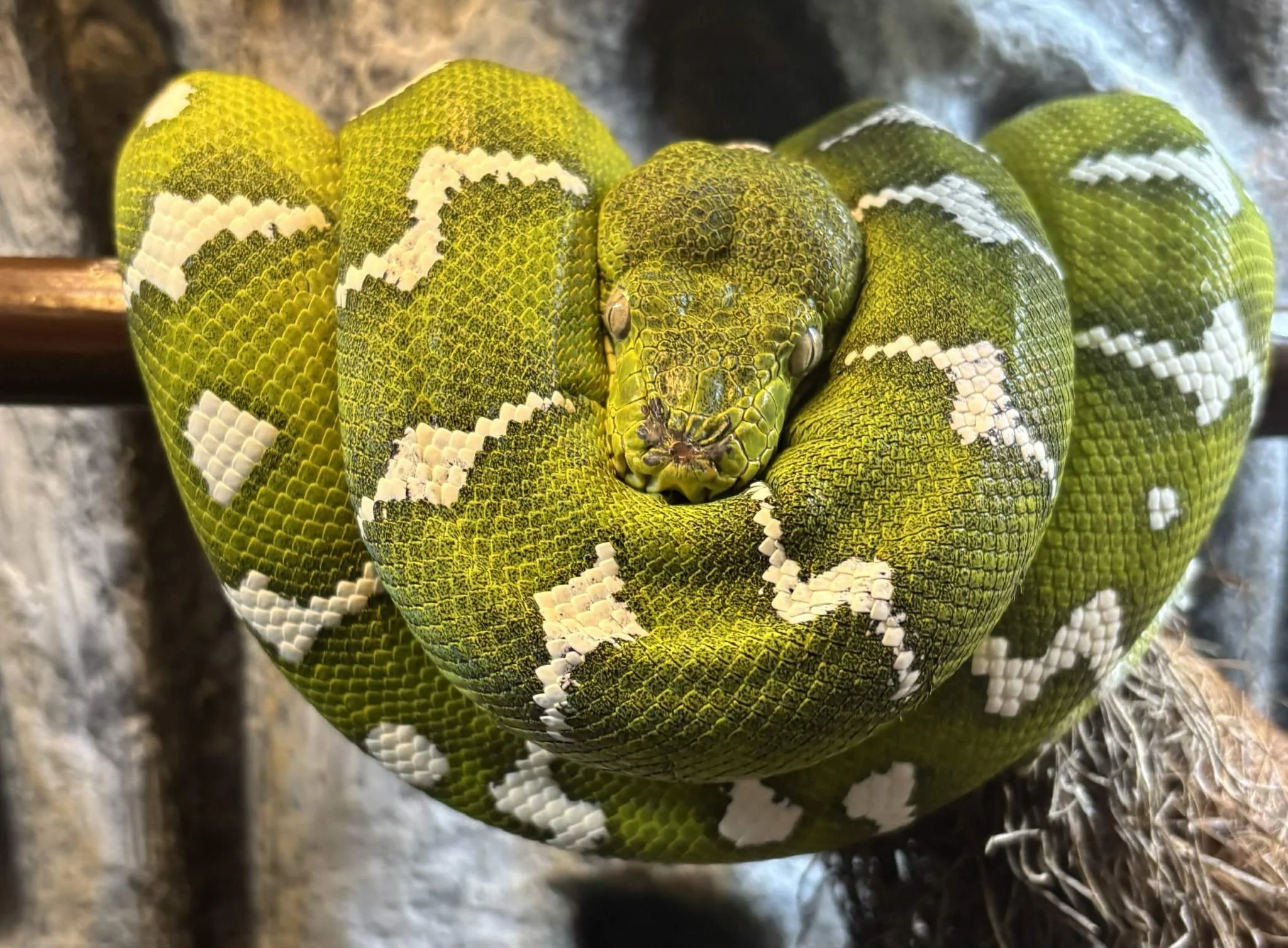
Miss Willie Line Northern Emerald Tree Boa - Owner: Legacy Rept
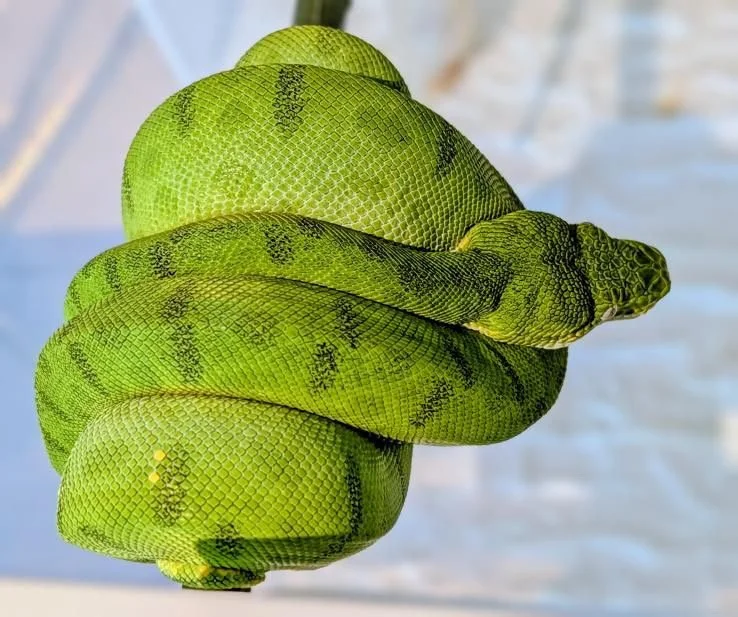
Anaconda Phase Northern Emerald Tree Boa - Owner: Noc Arboreals
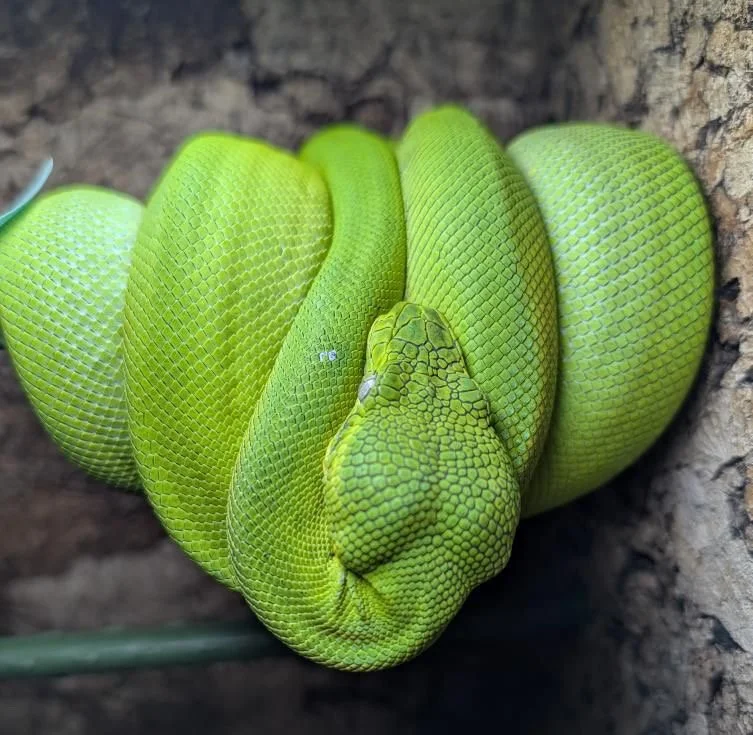
Patternless Northern Emerald Tree Boa - Owner: Noc Arboreals